


Product history
We have built trusting relationships with automakers around the world, and while conducting business globally, we are contributing to the realization of a safer and more comfortable automotive society through manufacturing that changes with the times.

[[ Behind-the-scene story of the development. ]]
Conventional power steering systems were mainly hydraulic systems that used oil, but electric power steering systems (EPS) were introduced to the market in the late 1980s. Electric EPS systems are lighter than hydraulic systems and are environmentally friendly because they do not use oil. However, for nearly 10 years after they were released on the market, there were limitations to semiconductor performance, and output could not be increased, so they were only applicable to light vehicles. In order to expand the market, a major technical challenge was to apply them to vehicles larger than regular cars, that is, to increase the output of the control unit, including improving semiconductor performance.
As a solution to this problem, in addition to improving the performance of semiconductors, we decided to adopt metal-based substrates, which were used in industrial applications at the time. However, since they were expensive, a new challenge for expanding their use was to achieve both the price range required for automotive use and long-term reliability.
At that time, it was common sense to provide an insulating layer of a certain thickness to reduce the risk of insulation breakdown on metal substrates, but we challenged ourselves to create an insulating layer half the thickness of the conventional one without compromising heat dissipation performance, and succeeded in reducing prices and ensuring reliability.
Behind this success were the technical and quality control capabilities of the circuit board supplier, who took on a challenge that overturned conventional wisdom at the time, as well as the knowledge gained from research activities on solder materials and shapes to alleviate the increased solder stress caused by thinner devices.
The adoption of this circuit board expanded design options, and when systems began to be expanded to passenger cars in the early 2000s, we succeeded in commercializing a product with 1.5 times the output performance of conventional products, which led to the subsequent acceleration of the expansion of high-output products.
Today, semiconductors have further evolved and the requirements for heat dissipation technology are changing, but we will continue to develop products that produce products with high efficiency heat dissipation at lower prices, and contribute to high reliability, convenience for end users, and improved environmental performance (weight reduction and reduced oil use) through the electrification of steering.
| 1975 | Single Function Timer | |
|---|---|---|
| 1977 | JASO Relay for automotive | |
| 1983 | Multi-timer unit | |
| 1984 | PCB Relay for automotive | |
| 1985 | World's first! Infrared Keyless entry | 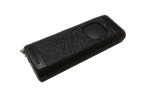 |
| 1987 | ISO Relay for automotive Power Seat Switch | |
| 1988 | World's first! Electric Power Steering controller Japan's first! Power Window Switch | 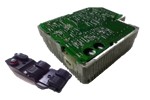 |
| 1989 | Micro ISO Relay | |