


FA system products
I explain about NIDEC INSTRUMENTS's FA system products.
NIDEC INSTRUMENTS provides FA automation systems in addition to FPD transfer robots and semiconductor wafer transfer robots.
We provide loader/unloader and in-line system of CF, PI process and ODF process with our FPD transfer robots.
In the field of post-processing of FPD manufacturing, we provide an automated inspection system that automatically turns on and performs automatic inspection for FPD modules of various shapes.
M-CONTactTM series
FPD module automatic lighting inspection device and peripheral equipment
FPD module automatic lighting inspection device
Since the post-process of FPD has a variety of production varieties and it is very difficult to standardize the process, there is still a lot of work done by human hands. To solve this problem, NIDEC INSTRUMENTS is helping automate by developing a lighting inspection device ”M-CONTactTM” series that enables automatic contact with the signal interface, an essential function to automatically check the operation of modules that are close to completion in the production process.
Basic concept of M-CONTactTM
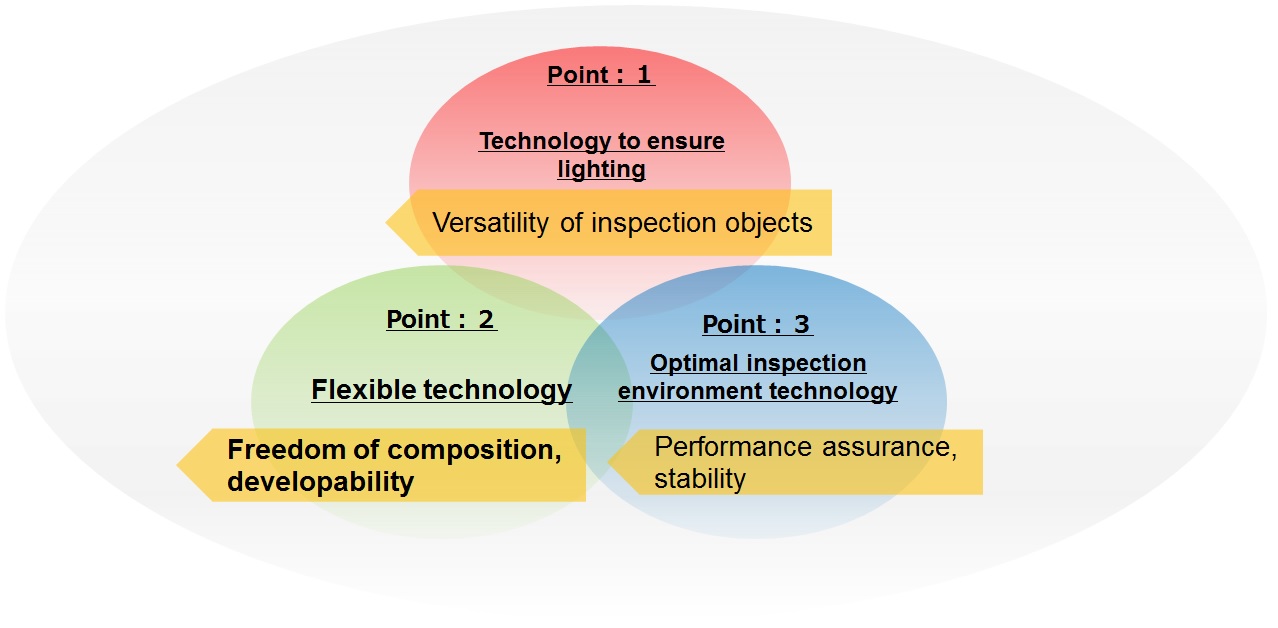
Are you having trouble with a panel that does not light up? We will solve it with technology to ensure that it lights up.
Technology to ensure lighting: The system is equipped with an image processing contact unit that can be adapted to a wide range of product shapes, structures and interfaces. This ensures a reliable automatic lighting inspection. Please contact us if you have any questions about the automatic contacting of FPCs, connectors, etc.
With the concept of freedom and development, we are able to automate high-mix low-volume production, save manpower and improve installation space efficiency.
Flexible technology: In order to cope with high-mix, low-volume production, we have minimized the number of jigs and fixtures to reduce set-up times. The jigs can be manufactured by the customer by means of design standardization. We can also convert your existing jigs to the new system on request. We can flexibly adapt the layout of the machine to suit your needs by reducing the size of the machine. The lighting process including inspection is also available as an option (e.g., unevenness inspection, brightness chromaticity measurement, OTP).
Do you have a problem with false positives? We can provide you with the optimum testing environment for your testing needs.
Optimal inspection environment technology: The equipment is equipped with a thorough darkroom environment, optical environment and adjustment mechanisms for optimal image processing. It is designed to prevent over-detection due to foreign objects, scratches or other factors. The system is also designed to prevent vibration during imaging.
Automatic contact technology
NIDEC INSTRUMENTS has a "technology to make sure lighting" that is important as a technology necessary for lighting inspection.
With its original automatic transfer technology and image processing, it is possible to delicately handle connector cables of various shapes, recognize their positions with certainty, and make sure to contact probe units to communicate signals.
Examples of corresponding modules

Mobile type shape
In-vehicle type shape
Panel shape
Sheet shape
Please enable JavaScript to watch this content.
Product line
M-CONTactTM series FPD module automatic lighting inspection device
Method of model display
【Example: Type-PK-1-C120】
| Type | Model name | Number of sheets processed | Camera specifications |
|---|---|---|---|
| Type | PK: Panel Inspection MH: Module-OPEN MT: Module-CLOSE HT: Module-OPEN_CLOSE | 1: 1 sheet inspection (8 to 15.6 inches) 2: 2 sheets inspection (1.5-7 inches) | C120: 120M Camera C151: 151M Camera C250: 250M Camera |
Lineup Specifications
| Series | Specifications | Product data link |
|---|---|---|
| Type-PK-1-C | Panel Inspection 1 Camera | View details |
| Type-PK-2-C | Panel Inspection 2 Camera | View details |
| Type-MH-1-C | Module-OPEN Inspection 1 Camera | View details |
| Type-MH-2-C | Module-OPEN Inspection 2 Camera | View details |
| Type-MT-2-C | Module-CLOSE Inspection 2 Camera | View details |
FPD Module peripheral equipment
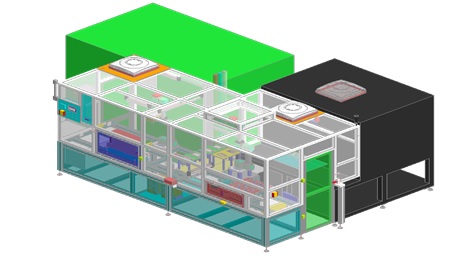
Loader / Unloader for lighting inspection and process equipment
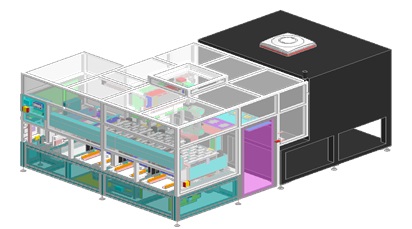
Loader / Unloader for lighting inspection
| Series | Specifications | Product data link |
|---|---|---|
| Loader unloader | Tray stacking, tray disassembly, supply and discharge | View details |
Loader / Unloader for FPD manufacturing equipment and transfer system
Loader / Unloader system
We provide Loader / Unloader systems using our FPD transfer robot.
We have the delivery record of indexers and in-line systems in ARRAY, CF, and CELL processes at FPD manufacturing plants.
In each process, units such as cassette stage, glass alignment, turn, and turnover which flips the board upside down are required, and a line is constructed including a dedicated unit as needed.
Reference example: CELL ODF Process

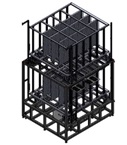
2Story cassette stage
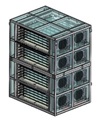
Buffer cassette
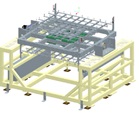
Turn over
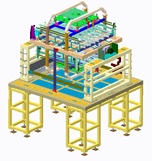
Turn over
(after VALC)
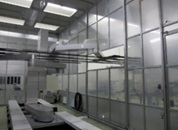
Loader/Unloader device using 8th generation robot
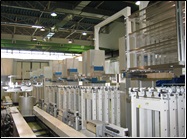
Panel supply system by combining wire cassette + conveyor robot + transfer robot
We propose the construction of an in-line system with an optimal layout using own large LCD glass substrate transfer robot
Our large LCD glass substrate transfer robot has the rigidity for large substrate transfer, and can operate at high speed by reducing the weight of the robot body and increasing the power of the motor. The HAND is made of carbon fiber reinforced plastic (CFRP) with a hollow structure inside the fork and a double tapered structure at the fork tip in the width and height directions to reduce weight. CFRP is a material whose rigidity varies according to the direction and shape of its fibers, and can be made lighter and more rigid by combining the shape and fiber direction. The use of CFRP hands enables high speed, high precision and low vibration transport.
The inside of the robot cover contains timing belts, ball screws and linear guides, which are the source of dust. Instead of using exhaust ducts to suck the dust out of the enclosure, a filter unit with a fan is installed close to the dust point to create sufficient negative pressure to exhaust the dust. The bearings used in the arm have a contact seal and a labyrinth structure.
The robot arms are not arranged horizontally, but are stacked on top of each other on a pillar axis. Compared to a horizontal arrangement, this arrangement requires a turning radius of only one arm, thus reducing the footprint. When the