BROACH TOOL / Types and Applications

Tool materials

 DetailsTool life
SKH55
(M35 Equivalent)
Standard material for broaches
GRANMET BRHigher wear resistance and hardness is needed✔✔
MAC-BPowder Metallurgy grade for higher wear resistance✔✔✔
MAC-DPowder Metallurgy grade for components of higher hardness
eg. Super heat resistant alloy
✔✔✔✔

Surface treatment

 DetailsTool life
NitridingA heat treating process that diffuses nitrogen into the surface of a metal to create a case-hardened surface.
Nano Dynamic PVDOur original Al-base PVD (physical vapor deposition) coating which is processed as thin-film.✔✔✔
Nano Dynamic ⅡPVDBetter wear resitance than Nano Dynamic PVD✔✔✔✔

Types of Cutting method

 FeatureUsage
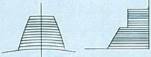
Cutting radially or upwardCutting radially or upwardA method in which the tooth groove of a work piece machined with a broach blade becomes the guide of the following blade aligned outward or upward. Therefore, this type has a better profile accuracy, and the teeth thickness after broach resharpening doesn't increse. On the other hand, the blades of the broach are easily adhesived by the chips due to the smaller side rake angle of the blades.General broaches
Extending outward and sizing radially or upward
(double-cut)
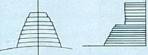
Extending outward and sizing radially or upward(double-cut)A method of cutting in two steps with roughing blades and finishing blades. Since the cutting force during finishing can be reduced, the distortion of the work piece due to the cutting force is reduced as well, as a conclusion, the dimensions of the work pieces in one batch likely to become more uniform. Therefore, it is suitable for a work piece with poor rigidity and shape that is easily deformed.Fir tree broaches,Broaches for high-precision use
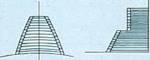
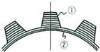
Back taper reliefBack taper reliefA method in which the tooth thickness of the rear blade is slightly reduced against the front and applied the side relief on the blade. It is suitable for the components that can be being adhesive on the blades due to its hardness or composition. (eg. Aluminium)For Workpiece with longer cut length or softer material which is likely adhered.
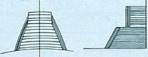
Increasing tooth thickness or form profileIncreasing tooth thickness or form profileA method of cutting in two steps with roughing blades and finishing blades. Since the cutting force during finishing can be reduced, the distortion of the work piece due to the cutting force is reduced as well, as a conclusion, the dimensions of the work pieces in one batch likely to become more uniform. Moreover, the profile of finishing blades are designed as exactly shape as the work piece's, therefore it is suitable for the work pieces, of which applications are gears or spline holes that need higher accuracy.Gear broaches,Broaches for high-precision use

Types of blade arrangement depending on the round blade positioning

TypesCutting orderFeature
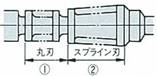
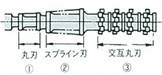
1.Spline broach with front round bladesSpline broach with front round bladesSpline broach with front round bladesThe round blades are positioned at the front. It is suitable for the workpiece which have larger tolerance before broaching because the front round blades can finish the hole tolerance more accurate before starting the spline groove cut.
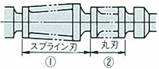
2.Spline broach with rear round bladesSpline broach with rear round bladesSpline broach with rear round bladesThe round blades are positioned at the back. It is suitable for the workpiece which needs the accuracy of minor diameter tolerance in general use.
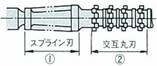
3.Spline broach with combination blades of spline and roundSpline broach with combination blades of spline and roundSpline broach with combination blades of spline and roundThe round blade and the spline blade are arranged alternately at the back. The spline blades become guides during the round blades are on the cutting so that it gives the lower eccentricity.
4.Spline broach with front round blades and combination bladesSpline broach with front round blades and combination bladesSpline broach with front round blades and combination bladesIt is the combination structure of No1 and No3.

BROACH TOOL / Types and Applications(PDF)

Related Products