
Climate Change Countermeasures
Reducing CO₂ Emissions from Our Business Activity
Basic stance
As a global business entity, the Nidec Group has been engaging in CO₂ emissions reduction during business activities (Scopes 1 and 2) since FY2004. Currently, we are promoting initiatives based on a dual approach of comprising energy-saving activities and renewable energy introduction. In the event that renewable energy introduction, which is the core of CO₂ emission reduction strategy, doesn’t go as planned, or carbon tax is introduced, cost may increase. Further, if we fail to respond to our customers’ and investors’ demand for addressing climate change and information disclosure, we may be subject to business suspension and poor reputation.
Target
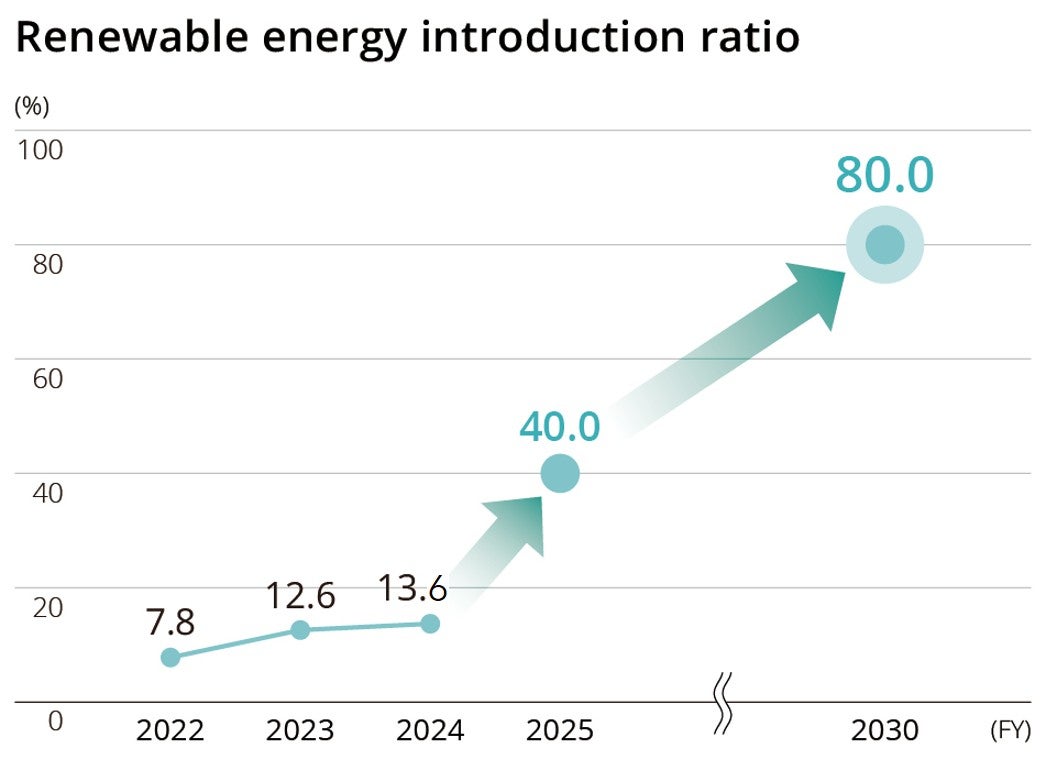
We aim to achieve net-zero for Scopes 1 and 2 emissions by fiscal year 2040; and the renewable energy introduction ratio of 40% by fiscal year 2025, and 80% by fiscal year 2030. Then, in March 2024, we
set new mid-term CO₂ emissions reduction targets. By fiscal year 2030, Nidec aims to reduce scopes 1 and 2 emissions by 42% compared to fiscal year 2022.
In August 2024, these aforementioned reduction targets were validated as science-based targets to achieve the Paris Agreement’s 1.5ºC target by Science Based Targets initiative (SBTi), an international
climate change initiative.
Scope 1 and 2 emissions reduction targets
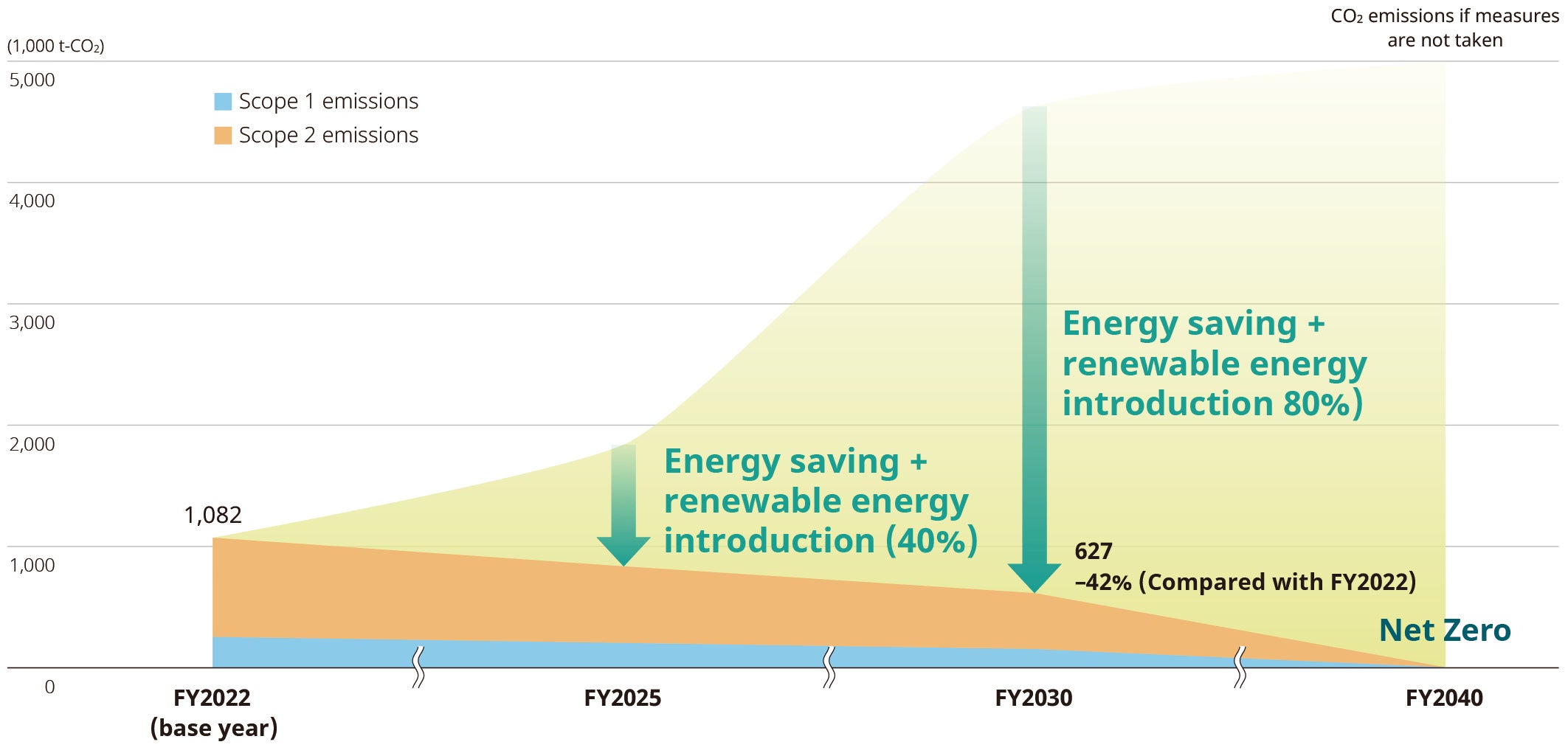
To achieve this goal, our seventh medium-term environmental conservation plan sets Scope 1 and 2 emissions reduction targets as part of our efforts to reduce the environmental impact of our business activities. One particularly important goal is to increase renewable energy introduction ratio to 40% across the NIDEC group by fiscal year 2025, which we have set as one of our materiality KPIs; we are continually working to reduce CO₂ emissions.
The seventh mid-term environmental conservation plan
| Item | Three-year targets (FY2025 goals) |
|---|---|
| Greenhouse gases emissions (Scope 1 and 2) | Reduce 15.8% compared to fiscal year 2022 (total amount) |
| Renewable energy | Renewable energy introduction ratio across the group: 40% |
Materiality: Contribute to environmental sustainability
| Theme to be addressed | KPI (FY2025) |
|---|---|
| Realize a carbon-free society | Renewable energy introduction ratio across the group: 40% |
| Annually disclose a climate change scenario in line with the Task Force on Climate Related Financial Disclosures (TCFD) recommendations |
Achievements
In fiscal year 2024, Scope 1 and 2 CO₂ emissions were 886,000 t-CO₂. By analyzing electricity based on our electricity visualization system, we have identified energy management-related issues and optimized the conditions to use production equipment and air-conditioning machines, among other energy-saving activities. Furthermore, by increasing the volume of renewable energy and introducing it to 14 new sites, our renewable energy introduction ratio increased from 7.8% in fiscal year 2022 to 13.6% in fiscal year 2024. These initiatives contributed to a decrease of 18.1% in CO₂ emissions compared to fiscal year 2022.
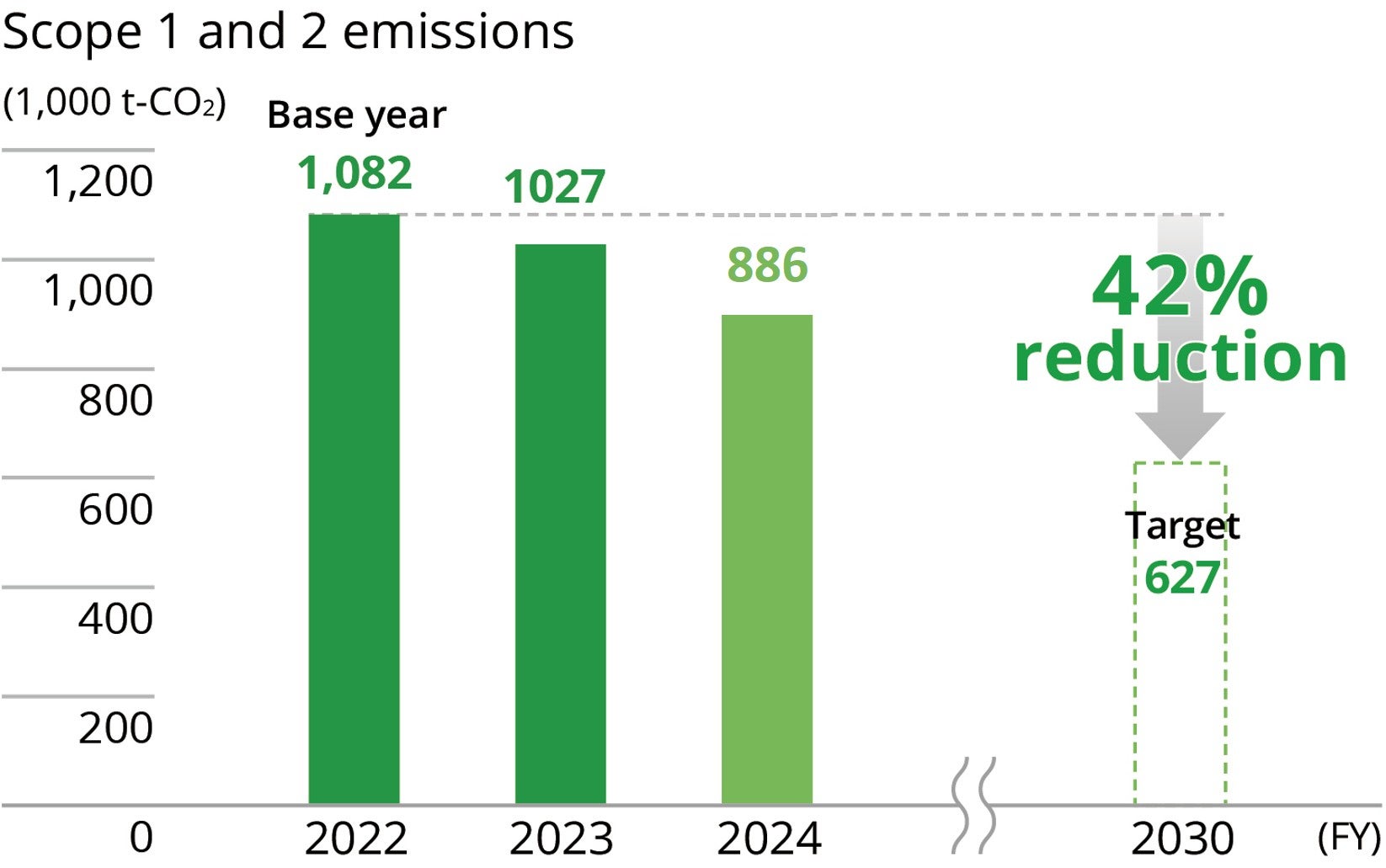
* Figures for FY2024 onwards have been revised calculation method for Scope 1 emissions to reflect actual conditions. Corresponding figures for FY2022 and FY2023 will be recalculated in due course.
Actions
Climate change Working Groups is established under the
Sustainability Promotion Meeting
, which is chaired by the President. To curb CO₂ emissions, this groups collaborate mutually beyond organizational border to implement more effective actions. Specifically, the groups take action based on
both the energy efficiency improvement for Nidec’s own businesses (energy-saving actions) and the renewable energy introduction. With over 300 sites worldwide, we accumulate information on our various
actions, and share it globally to contribute to mitigate climate change.
In addition, based on the aforementioned actions,
we have adopted an internal carbon pricing (ICP) system
as a management system/mechanism to promote the use of renewable energies further. The internal carbon price was set at 20,000 yen/t-CO₂ with reference to the reports published by the International Energy
Agency (IEA), and will be revised as appropriate in response to changes in the external environment. We will accelerate our efforts to combat climate change by promoting capital investments that
contribute to decarbonization. As we make our businesses more energy-efficient, we will select model factories by business and share their results with other sites to expedite our actions. On the other
hand, to introduce those energies, we will execute plan-based, comprehensive procurement based on Virtual PPA* in Europe, combined with the introduction of renewable energies to individual sites.
*Virtual PPA(Power Purchase Agreement): A type of contract to transact only environmental values, not the actual electricity, with an electricity generation utility.
Improving our internal energy efficiency
To reduce electricity consumption, we are promoting energy conservation activities through the following steps:
- ・Visualizing the electricity consumption of each equipment
- ・Conducting energy-saving diagnoses
- ・Optimizing of equipment usage conditions
Visualizing the electricity consumption of each equipment
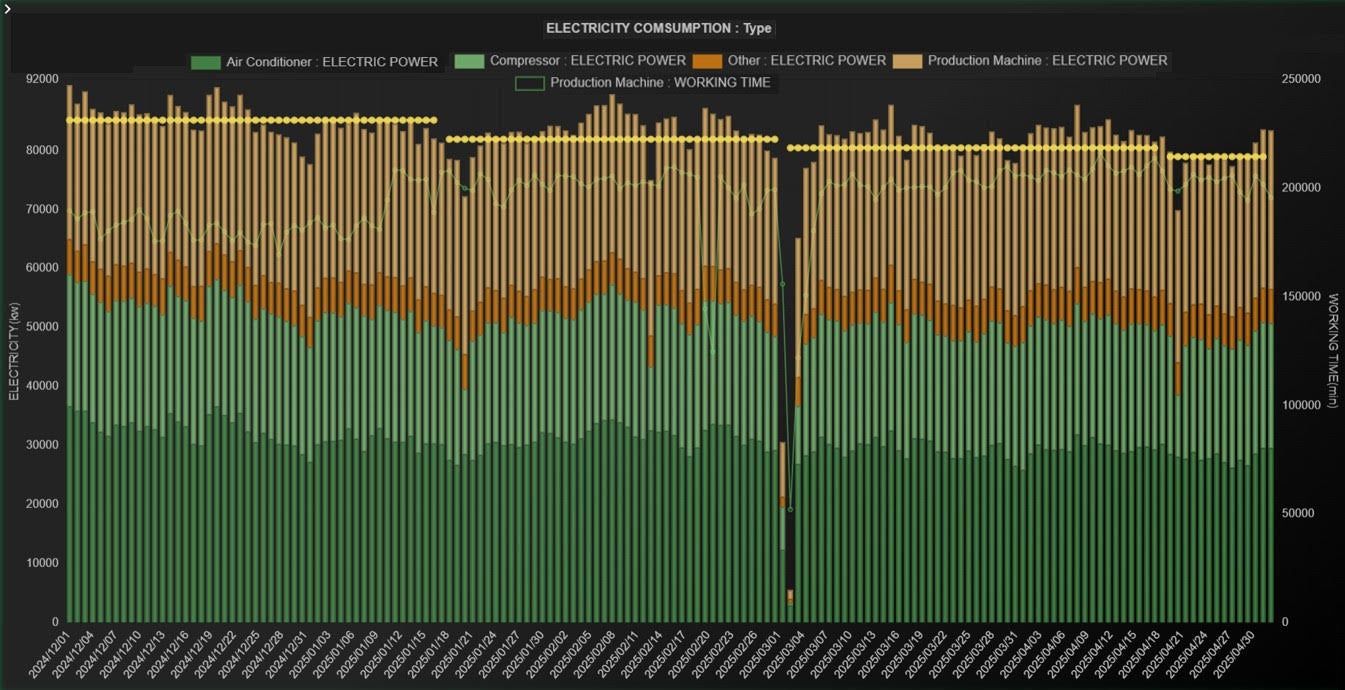
Nidec Center for Production Technology R&D, which is tasked with strengthening the manufacturing infrastructure to accelerate the Nidec Group’s growth, has internally developed an electricity visualization system to create an environment that monitors individual sites’ electricity consumption. In addition, the center worked with sites to jointly build a system to promote electric power analysis and energy-saving activities, constantly providing support to utilize obtained information effectively.
Conducting energy-saving diagnoses
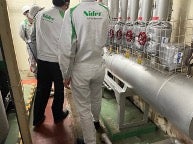
We visualize the electricity consumption of equipment, narrow down the issues, and then conduct an energy-saving diagnosis. Energy-saving experts in the Nidec Group visit the sites and conduct site-specific activities.
Optimizing of equipment usage conditions
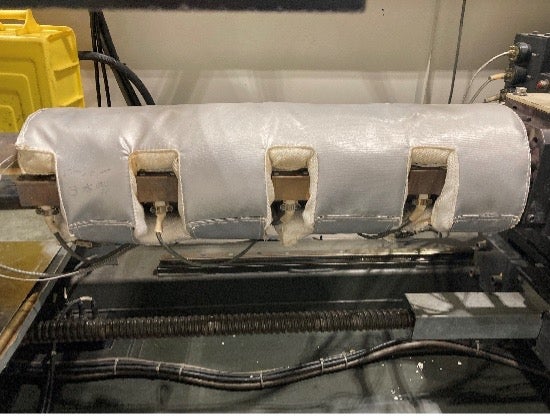
Nidec Vietnam Corporation has revised and optimized the usage of its injection molding equipment as part of its energy-saving activities. After installing heat-insulating covers on the cylinders and drying units’ tanks, which are the heat sources of the its 163 injection molding machines, the company successfully saved approximately 150,000kWh of electricity per year.
Furthermore, our actions to improve energy efficiency also cover our factories’ air-conditioning equipment, which is essential in the plans’ temperature and humidity control. These actions include installing a stirring device to the equipment’s outdoor unit to disperse refrigerant equally to reduce load and improve our heat exchangers’ efficiency. These actions are expected to reduce those air-conditioning equipment’s annual electricity usage by 15% on average. Going forward, we will install the stirring device first to the air-conditioning equipment in injection molding equipment area to further expand the energy-saving effects.
Introducing renewable energies
In another activity, Nidec is replacing conventional energies with renewable ones to reduce its electricity usage and CO₂ emissions. In particular, Nidec is active in:
- ・Installing photovoltaic facilities
- ・Revising the contents of electricity contracts to procure renewable energies
Installing photovoltaic facilities
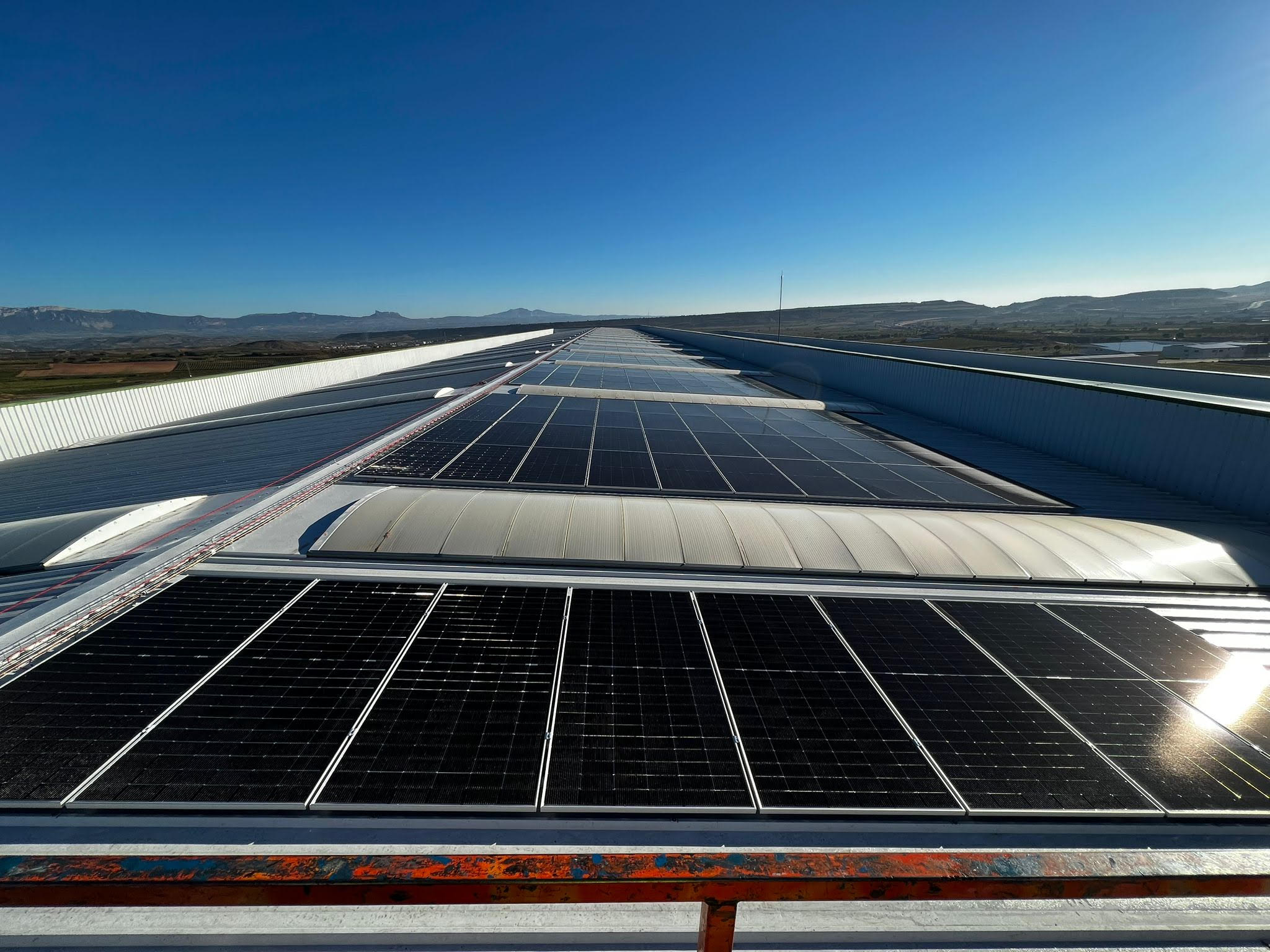
In November 2023, Nidec Arisa S.L.U. in Spain installed on its buildings’ roofs a 550kW-scale photovoltaic electricity generation system that can generate 550,000kWh annually. Prior to the installation, the company had renewed the plans of its electricity contract, and already achieved a 100% renewable energy introduction ratio as a production base. The above installation led the company to generate renewable energy on its own as well.
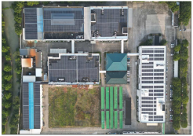
Nidec Precision Components Zhejiang Co. Ltd. utilized on onsite PPA to introduce a 1621kW photovoltaic electricity generation system in February 2024. This will enable the reduction of its annual CO₂ emissions by 830 tons.
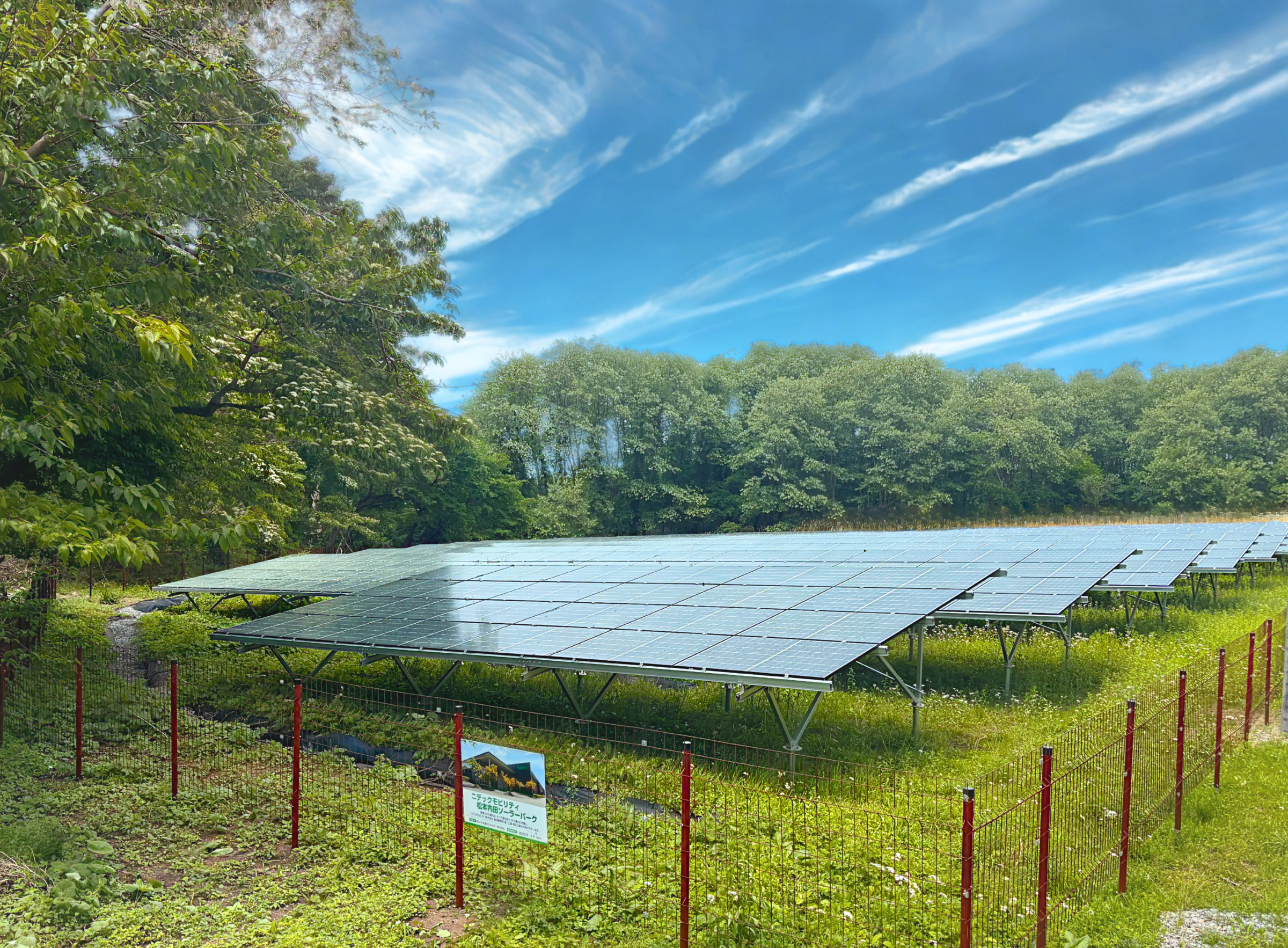
In addition, Nidec Mobility Corporation’s Iida Office became the first Nidec Group company to use an offsite PPA* to start renewable energy-based electricity procurement in January 2025. Now the factory can utilize both the new procurement system, combined with the existing photovoltaic power generation system install on its premises, to use a larger amount of renewable energies. In this series of activities, the company plans to install a new, 2,783kW-scale photovoltaic electricity generation system in a remote place to secure an average of about 3.4 million kWh of renewable energies per year. This is approximately 30% of the Iida Factory’s annual electricity usage, and the new system will be able to curb the company’s annual CO₂ emissions by 1,400 tons annually.
*Offsite PPA (Power Purchase Agreement): A type of contract to secure electricity from remotely installed renewable energy-based electricity generation equipment to obtain environmental values.
Revising the contents of electricity contracts to procure renewable energies
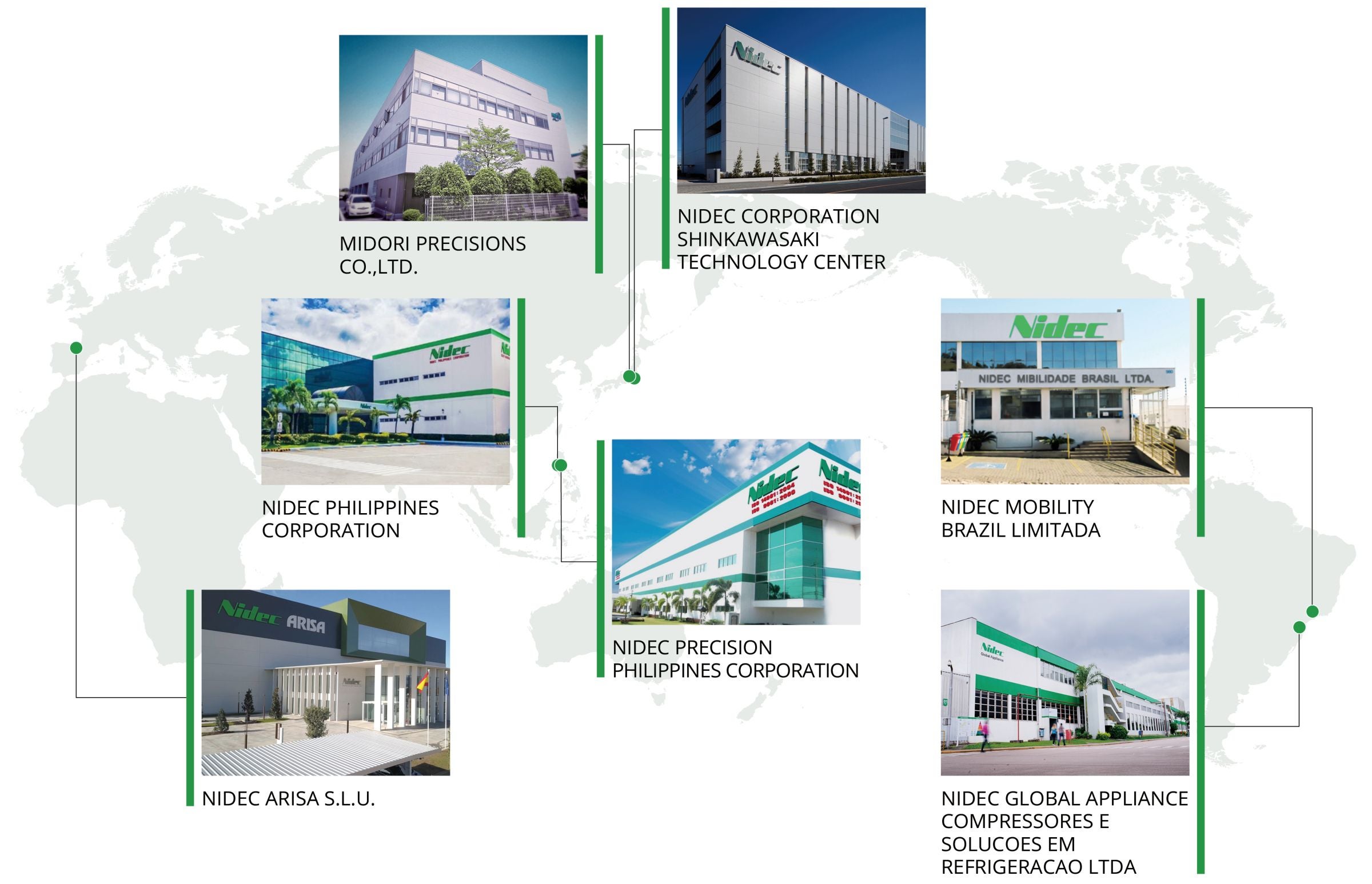
The following seven factories executed renewable energy-based electricity contracts, generating electricity entirely with renewable energies.
Furthermore, Nidec Global Appliance Compressor in Brazil achieved carbon neutrality for the Scope 1 & 2 emissions in fiscal year 2024.