G/Governance
Risk Management
Basic stance
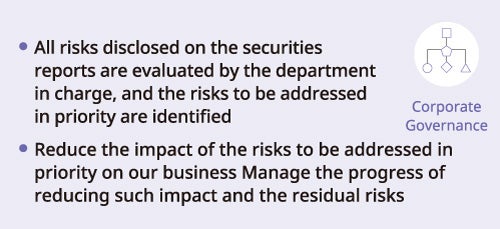
It is necessary and important to identify and manage risks for the purpose of preventing the expansion of losses due to lack of readiness for possible risks, loss of business opportunities, decline of ratings, and other negative impacts. If the department responsible for appropriately managing risks is not identified, or if risk assessments are not carried out and risks that should be dealt with as a priority are not identified, it will be impossible to take appropriate action in the event of unexpected circumstances, and there is a possibility that this could have a serious impact on the business. The NIDEC Group is working to ensure business continuity by taking a global perspective and looking at both medium- to long term risks and day - to - day risks that could affect the business. To this end, we have established a system for investigating and evaluating risk events while confirming the effectiveness of current countermeasures.
Target
Materiality
Systems and actions
Risk management system
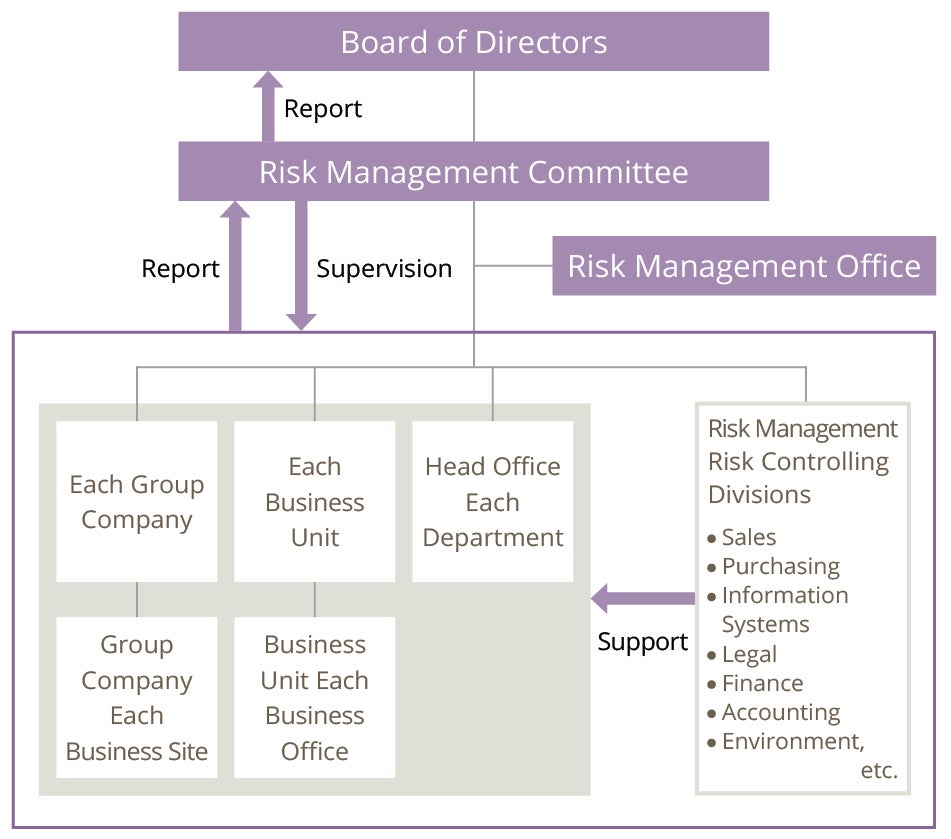
To analyze, evaluate, and appropriately manage the risks inherent in business operations, the NIDEC Group has established a comprehensive risk management system that covers the entire group. At the core of the system is the Risk Management Committee, which serves as the supervisory body. In collaboration with the headquarters' management divisions, business units, and group companies, the NIDEC Group works collectively to address risks. To ensure the effectiveness of the risk management system, the Board of Directors provides proper guidance and advice. At the beginning of each fiscal year, the Risk Management Committee reports the basic policy for risk management activities to the Board of Directors. Additionally, any amendments to the Risk Management Regulations, which define the accountability structure of the risk management system, are subject to approval by the Board. Under the guidance and advice of the Board of Directors and the oversight of the Risk Management Committee, the officers responsible for risk management, risk managers, and the Risk Management Controlling Divisions are responsible for implementing concrete measures. Supporting these leaders, as well as planning and strategizing risk management initiatives, and serving as the secretariat for the Risk Management Committee, is the Risk Management Office, which is the dedicated department for these functions. Corporate Administration & Internal Audit Department audits the conditions of this risk management system.
Risk Management System
Risk Management Committee
The Risk Management Committee is placed under the Board of Directors and chaired by the executive officer in charge of risk management. The Committee decides risk management policies and measures and submits reports and proposals to the Board of Directors. It also monitors the company-wide risk management status and constantly reviews the adequacy of allocation of resources necessary for risk management. Based on the annual policies established by the Risk Management Committee, department general managers in charge of risk management and Group companies formulate and carry out their respective annual risk management plans.
Risk Identification and Assessment Activities
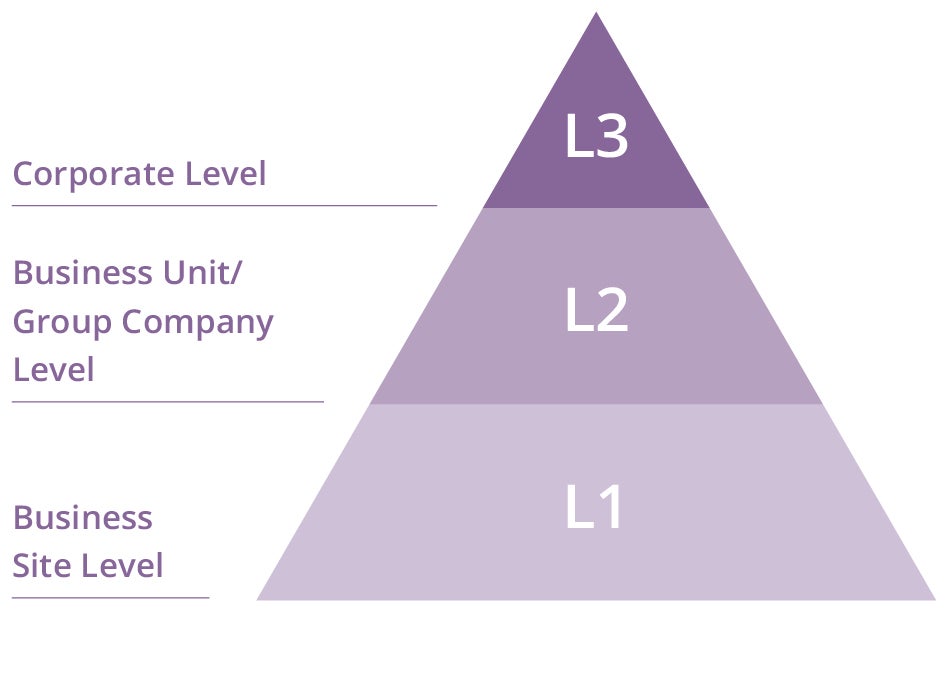
Upon receiving a request from the Risk Management Office, the Risk Managers of the Head Office, group companies, and Business Units periodically investigate and evaluate risk events that affect business based on the company-wide risk management flow chart and the hierarchy of risk investigation and assessment activities. Risk events are classified into four categories as below.
- Management strategy risks
- Business operation risks
- Governance risks
- Contingency risks
Risk Management Flow Chart

<A summary of the main actions in the risk management flow chart>
Plan
Risk Identification
:Risk managers appointed by the Risk Management Office identify risk events that may affect business every fiscal year.
Risk Assessment
:The Risk Managers identifies the risk level after evaluating the likelihood of occurrence and the severity of consequences of the identified risk events in accordance with the company-wide common indicators In risk assessment, we consider risk scenarios for each event and strive to grasp potential risks.
Additional Risk Reduction Measures
:In particular, if the risk level is "serious," or "high," we will plan and implement risk reduction measures that will be added to current risk management activities.
Do
Monitoring :For risks that may affect our operating results, stock price, financial position, etc. as determined by the Risk Management Committee, KRI (Key Risk Indicator) shall be established and monitored.
Check / Action
Improvement
:We will check the implementation status of risk reduction measures and take improvement measures as necessary. We will analyze the results of our risk management activities and continuously improve our
risk management system and operational status.
When identifying and evaluating risks, we check the current status of risk management activities and the implementation of risk reduction measures, monitor the residual risks, and mutually use the results
in measures at other levels. For example, risks identified at the Business Unit/Group Company Level (L2) are checked at the Corporate Level (L3) as well, and if any issues common to all group companies
that require improvement under the leadership of the Corporate Level (L3) are identified, they are reflected in the Corporate Level (L3)'s risk management activities as appropriate. In this way,
we are moving forward with efforts to correlate risk management activities at each level.
For serious contingent risks that may lead to business interruption, the Business Unit/Group Company Level (L2) organizations will periodically check the status of the formulation of BCPs (Business Continuity Plans) of
the major Business Site* Level (L1) organizations under their control, thereby ensuring that improvement activities are continuously conducted for risk reduction. In FY2024, we have reorganized the items subject to risk
assessment to enhance the efficiency of risk assessment activities. Additionally, evaluations were conducted based on the revised risk items, leading to the identification of priority risks. These risks have been
incorporated into the "Risk Factors" section, which will be disclosed in the next Annual Securities Report.
*Major business sites: Business operation sites that make up 80% of sales of the Business Unit or Group company they belong to
Hierarchy of Risk Investigation and Assessment Activities
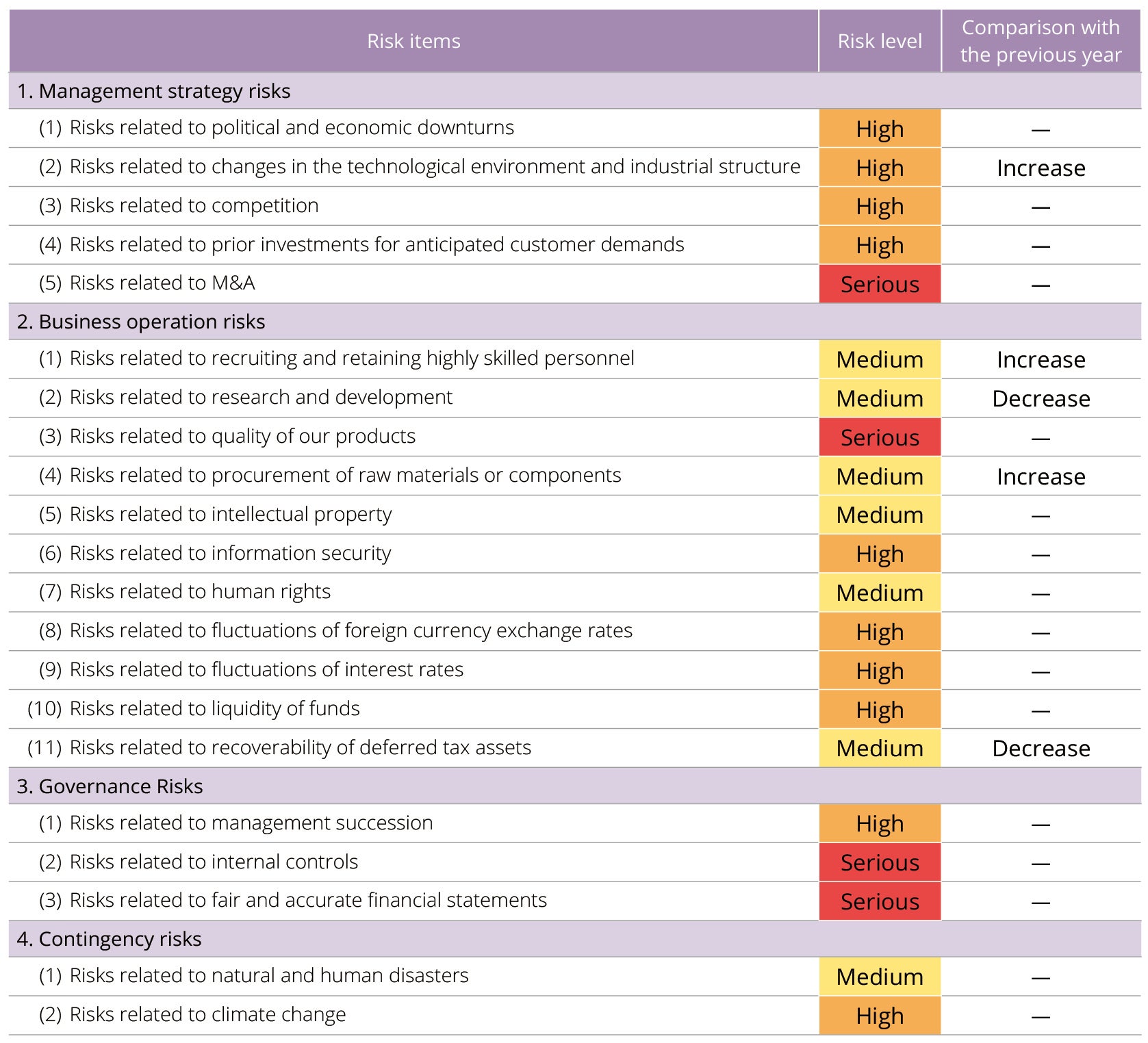
The risk level is determined by applying the matrix shown below to the residual risk after the implementation of risk measures, which is classified into five levels based on the likelihood of occurrence and the severity of consequences. The risk level is then evaluated in four levels of serious, high, medium, and low. Risk events identified as "serious" or "high" require consideration of additional risk reduction measures. The Risk Management Office confirms the implementation status of risk reduction measures at the end of the fiscal year, and any issues are reported to the Risk Management Committee.
Risk Level Identification Matrix

Based on the results of the risk assessment activities described above, the following risks have been identified that may affect our operating results, stock price, financial position, etc.
Crisis management
In anticipating crisis response in reality, we have in place a practical crisis handling procedure (with a flowchart and a checklist) based on the “Crisis Management Regulations” and the “BCP (Business Continuity Plan) Basic Policy,” both of which cover the entire Nidec Group.
BCP (Business Continuity Plan)
With risk managers at individual business sites all around the world and other associated personnel, the Nidec Group tries to ensure early detection of, and proper response to, matters that could hamper business continuity. The training, participated by a total of more than 3,830 employees as of the end of March 2025, helped them improve their skills to counter such events.

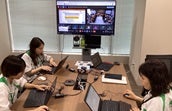
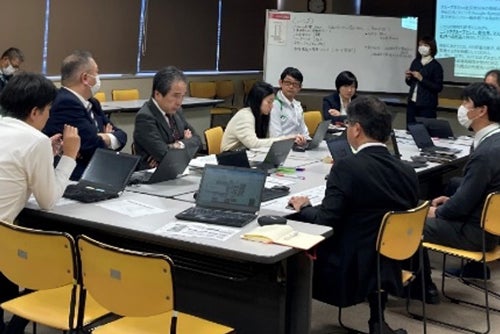
Employees participate in desktop BCP training for a business-disrupting disaster
(Site in India [photo on left] and headquarters in Japan [photo on right])